DMT
  • Products
    • Muscle Strip Systems >
      • Tissue Puller System - 560TP
      • MyoDynamics Muscle Strip System - 840MD
    • Organ Bath System >
      • Organ Bath System - 751MT
      • Organ Bath System - 752eT
      • Organ Bath System | 820MO
    • Pressure Myograph Systems >
      • Pressure Myograph System - 110PXL
      • Pressure Pulsation Myograph System - 112PP
      • Pressure Myograph System - 114P
      • Pressure Myograph System - 114PB
      • Pressure Myograph System - 114PN
      • Pressure Myograph System - 120CP
    • Wire Myograph Systems >
      • Single Wire Myograph System - 320A
      • Confocal Wire Myograph System - 360CW
      • Dual Wire Myograph System - 420A
      • Multi Wire Myograph System - 620M
      • Automated Multi Myograph System - 630MA
    • Myograph Software >
      • MyoNORM
      • MyoDAQ Acquisition
      • MyoVIEW 5
      • MyoPULSE
    • Accessories & Parts >
      • Buffer Filler System
      • FlowMeter - 162FM
      • Stimulators >
        • Stimulator - CS4+
        • Stimulator - CS8
  • Resources
    • DMT Academy >
      • Product Videos
      • Practical Guides
      • Protocols & Articles
    • Guides & Manuals
    • Training/Installation
    • System Maintenance
    • Software Downloads
  • DMT Insights
    • Latest News
    • Lab Spotlight
    • Installation Stories
  • About us
  • Contact
Stimulator – CS8

Eight-channel constant-voltage stimulation for controlled ex vivo experiments

The DMT Stimulator CS8 is an eight-channel voltage stimulator for controlled electrical stimulation in ex vivo muscle, vascular and tissue experiments. It supports single-pulse, continuous-frequency and train-pulse protocols, with MyoPULSE software control for programmable and repeatable stimulation workflows.

Request quote Download user manual View MyoPULSE
8 channels Higher-capacity stimulation workflows.
0–31 V Constant-voltage output.
0.1–25 ms Adjustable stimulus width.
MyoPULSE Software-controlled protocols.
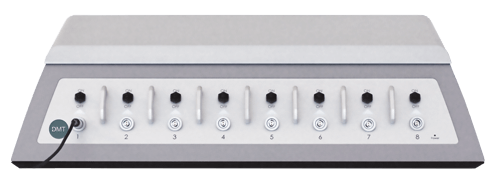
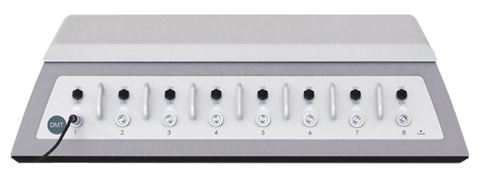
Eight-channel constant-voltage stimulator DMT Stimulator CS8 eight-channel constant-voltage stimulator
Why choose CS8

Multi-channel stimulation control for rigorous ex vivo research

CS8 is designed for laboratories that need controlled electrical stimulation across multiple preparations, treatment groups or experimental conditions while keeping protocols programmable and repeatable.

01

Eight-channel capacity

Manage several preparations, treatment groups or stimulation sites from one stimulator.

02

Muscle and vascular stimulation

Support striated muscle, smooth muscle, vascular-neuromuscular and tissue stimulation workflows.

03

Flexible protocol design

Run single-pulse, continuous-frequency and train-pulse stimulation protocols.

04

MyoPULSE control

Program parameters, save protocols and retrieve them for repeated use across operators and study days.

05

Trigger synchronization

Coordinate stimulation with compatible acquisition systems, mechanical equipment or related instruments.

06

DMT system compatibility

Configure the CS8 for compatible myograph, organ bath, pressure myograph and muscle strip workflows.

System overview

Controlled stimulation matched to the chamber and preparation

The CS8 supplies electrical stimulation across up to eight channels. MyoPULSE defines the protocol, while the selected electrode cover, mounting jaw or electrode accessory delivers the stimulus to the preparation.

The final configuration depends on the DMT system, chamber geometry, tissue preparation, electrode arrangement and intended stimulation protocol.

Eight stimulation channels Support larger multi-preparation and comparative experimental designs.
Mono or bipolar output Select the output mode required for the preparation and protocol.
Protocol software Use MyoPULSE to program, save and repeat stimulation procedures.
Electrode accessories Match the electrode cover or mounting accessory to the chamber and tissue preparation.
Trigger input and output Coordinate stimulation with compatible acquisition and experimental equipment.
Typical applications

Electrical stimulation for muscle, vascular and tissue research

CS8 supports controlled stimulation-response workflows where repeatable electrical input is central to the experimental endpoint.

Muscle contractility Twitch response Fatigue studies Vascular stimulation Perivascular nerves Tissue stimulation Comparative studies Synchronized acquisition
01

Fatigue and contractility studies

Use train-pulse protocols to study twitch response, repeated stimulation, fatigue development and recovery in muscle preparations.

02

Vascular-neuromuscular function

Evaluate vascular smooth muscle, perivascular stimulation and vascular-neuromuscular responses.

03

Perivascular stimulation

Apply controlled electrical stimulation around mounted vascular preparations using compatible chamber accessories.

04

Tissue-embedded stimulation

Support tissue preparations mounted in compatible myograph, organ bath and muscle strip systems.

05

Comparative multi-sample studies

Use eight channels for treatment-control comparisons, multi-preparation designs and protocol optimization.

06

Synchronized data acquisition

Coordinate stimulation with compatible recording, acquisition or mechanical equipment through trigger functions.

MyoPULSE workflow

Program, save and repeat stimulation protocols

CS8 is controlled by DMT MyoPULSE software. Researchers can enter stimulation parameters, save protocols and retrieve them for repeated use.

This supports standardized stimulation procedures across operators, experimental days and study groups, while allowing simple and complex channel-specific protocol designs.

View MyoPULSE Software downloads
Protocol programming Define pulse voltage, pulse width, frequency, train structure and timing.
All-channel setup Apply one stimulation protocol across all eight channels.
Individual channels Configure and run channel-specific stimulation protocols.
Protocol storage Save established protocols and reload them for future experiments.
Trigger synchronization Configure external input and output triggers for compatible equipment.
Force-voltage relationship Support determination of the stimulation voltage associated with maximal muscle contraction.
Protocol types

From single twitches to complex train stimulation

Select the stimulation format and timing structure that match the biological preparation and endpoint.

01

Single pulse

Apply an individual voltage pulse for twitch-response, threshold and simple stimulation studies.

02

Continuous frequency

Use repeated stimulation at a defined frequency for frequency-dependent response studies.

03

Train pulse

Configure pulses, trains and groups for fatigue, tetanic contraction and complex stimulation designs.

04

Trigger functions

Start stimulation from an external signal or send a trigger to compatible acquisition or mechanical equipment.

Electrode accessories

Match the electrode cover or mounting accessory to the chamber

Electrode accessories are selected according to the DMT system, chamber geometry, tissue preparation and intended stimulation protocol.

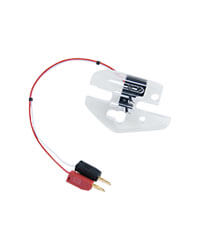
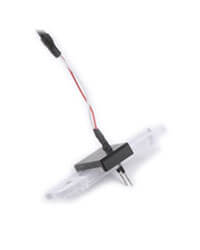
Electrode cover for DMT wire myograph stimulation workflows
Wire myograph

Electrode chamber cover

Chamber-cover electrode configuration for compatible DMT wire myograph stimulation workflows.

Electrode cover for DMT 840MD muscle strip stimulation workflows
840MD

Muscle strip electrode cover

Chamber-cover option for compatible 840MD muscle strip stimulation workflows.

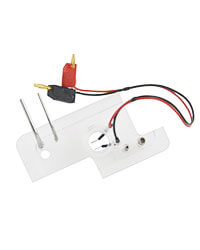
Electrode cover for DMT 112PP and 114P pressure myograph workflows
Pressure myograph

112PP and 114P electrode cover

Chamber-cover option for compatible pressure myograph stimulation workflows.

Electrode cover for DMT 820MO organ bath stimulation workflows
820MO

Organ bath electrode cover

Electrode-cover option for compatible 820MO organ bath stimulation workflows.

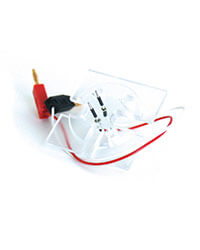
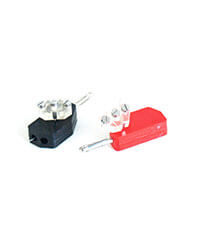
DMT mounting jaws with electrode
Accessory

Mounting jaws with electrode

Jaw-based electrode accessory for compatible wire myograph and stimulation setups.

DMT Stimulator CS8 with eight stimulation channels
CS8

Eight-channel stimulation unit

Pair the CS8 with the electrode accessory that matches the system, chamber and tissue preparation.

Electrode compatibility depends on the specific DMT system, chamber configuration and biological preparation. Confirm the electrode cover, mounting jaws and stimulation setup with DMT before ordering or retrofitting an existing system.
Technical data

Key CS8 specifications

Core output, pulse, timing, trigger, software and power specifications for evaluating the eight-channel stimulation workflow.

Confirm the DMT system, chamber type, biological preparation, electrode accessory, required voltage and intended stimulation protocol before ordering.
Output
Channels
8
Output type
Constant voltage
Output voltage
0–31 V
Output mode
Mono / bipolar
Pulse
Stimulus width
0.1–25 ms
Maximum frequency
2,500 Hz
Pulses in one train
1–32,000
Train structure
Trains in one group
1–32,000
Groups
1–32,000
Trigger pulse delay
0–3,600 seconds
Control
Software
DMT MyoPULSE
Protocol formats
Single, continuous and train pulse
Trigger functions
Input and output
Computer connection
USB
Power
Power adapter input
100–240 V, 50/60 Hz
Power adapter output
48 V DC
Power rating
70 W
System compatibility

Configure the CS8 for the correct DMT system and preparation

Compatibility depends on the chamber, mounting arrangement, preparation and selected electrode accessory. DMT should confirm the final configuration.

Wire myograph

Wire myograph workflows

Compatible wire myograph stimulation workflows using the appropriate chamber cover or electrode mounting accessory.

View wire myographs
Muscle

840MD workflows

Muscle strip stimulation and trigger workflows using the appropriate chamber cover and CS8 connection.

View muscle systems
Organ bath

820MO workflows

Compatible organ bath stimulation workflows where controlled electrical input forms part of the study design.

View 820MO
Pressure myograph

112PP and 114P workflows

Compatible pressure myograph stimulation workflows using the appropriate chamber cover and electrode configuration.

View pressure myographs
CS4+ or CS8

Select the channel capacity that matches the workflow

The main selection point is the number of stimulation channels, although the chamber, preparation and electrode configuration must also be considered.

Choose CS8

Higher-capacity stimulation

Suitable when the study requires more parallel stimulation channels or larger comparative designs.

  • Up to eight stimulation channels
  • Larger multi-preparation workflows
  • Treatment-control comparisons
  • Higher-throughput comparative protocols
  • Projects that may expand beyond four channels
Choose CS4+

Focused four-channel workflows

Suitable for compact setups and laboratories that do not require eight channels.

  • Four-channel DMT systems
  • Smaller studies and pilot experiments
  • Protocol-development workflows
  • Teaching and training setups
  • Focused treatment-control comparisons
View CS4+
Resources

CS8 documentation, software and related systems

Use the confirmed DMT resources below when planning the complete stimulation workflow.

PDF

CS4+/CS8 user manual

Operating instructions, setup, MyoPULSE guidance and technical information.

→
PULSE

MyoPULSE software

Program, save and run stimulation protocols for CS8 workflows.

→
SW

Software downloads

Find DMT software installers, drivers and related software resources.

→
CS4+

Stimulator – CS4+

Review the four-channel option for focused stimulation workflows.

→
ACC

Accessories and parts

Review electrode covers, mounting accessories and related equipment.

→
WIRE

Wire myograph systems

Review DMT wire myographs compatible with stimulation workflows.

→
BATH

Organ bath systems

Explore DMT organ bath systems for tissue and smooth-muscle stimulation workflows.

→
TECH

Technical support

Request help with system fit, electrodes, software or protocol configuration.

→
Configuration guidance

Planning a multi-channel electrical stimulation workflow?

Share the DMT system model, chamber type, biological preparation, number of channels, electrode geometry, required voltage, stimulation format and synchronization needs. DMT can confirm the appropriate CS8, electrode and MyoPULSE configuration.

Request a quote Confirm compatibility

Products

  • Wire Myographs
  • Pressure Myographs
  • Organ Bath Systems
  • Muscle Strip Systems

Resources

  • DMT Academy
  • Product Videos
  • How-to Videos
  • Protocols & Articles
  • Software Downloads

Support

  • Guides & Manuals
  • Training
  • System Maintenance
  • Ask for Advice

Company

  • About DMT
  • Contact
  • Terms & Conditions
  • Software License
  • Privacy Policy
  • Warranty

Contact

  • Contact DMT Denmark
  • Contact DMT USA
  • Regional contacts

© 2026 Danish Myo Technology A/S

  • Products
    • Muscle Strip Systems >
      • Tissue Puller System - 560TP
      • MyoDynamics Muscle Strip System - 840MD
    • Organ Bath System >
      • Organ Bath System - 751MT
      • Organ Bath System - 752eT
      • Organ Bath System | 820MO
    • Pressure Myograph Systems >
      • Pressure Myograph System - 110PXL
      • Pressure Pulsation Myograph System - 112PP
      • Pressure Myograph System - 114P
      • Pressure Myograph System - 114PB
      • Pressure Myograph System - 114PN
      • Pressure Myograph System - 120CP
    • Wire Myograph Systems >
      • Single Wire Myograph System - 320A
      • Confocal Wire Myograph System - 360CW
      • Dual Wire Myograph System - 420A
      • Multi Wire Myograph System - 620M
      • Automated Multi Myograph System - 630MA
    • Myograph Software >
      • MyoNORM
      • MyoDAQ Acquisition
      • MyoVIEW 5
      • MyoPULSE
    • Accessories & Parts >
      • Buffer Filler System
      • FlowMeter - 162FM
      • Stimulators >
        • Stimulator - CS4+
        • Stimulator - CS8
  • Resources
    • DMT Academy >
      • Product Videos
      • Practical Guides
      • Protocols & Articles
    • Guides & Manuals
    • Training/Installation
    • System Maintenance
    • Software Downloads
  • DMT Insights
    • Latest News
    • Lab Spotlight
    • Installation Stories
  • About us
  • Contact