
Blind-sac chamber design
Mount the vessel between a glass cannula and a steel pin rather than between two cannulas.
The DMT 114PB is a specialized pressure myograph for studying isolated small vessels in a blind-sac configuration under controlled, near-physiological pressure. The preparation is mounted between a glass cannula and a mounting steel pin, while vessel diameter, lumen, wall structure and pressure-dependent responses are recorded with MyoVIEW.
The 114PB is intended for studies where the vessel preparation or protocol requires a closed-end mounting configuration and where pressure-dependent diameter and wall responses are the principal experimental endpoints.
Mount the vessel between a glass cannula and a steel pin rather than between two cannulas.
Study intact vessels under stable pressure while preserving their tubular geometry.
Evaluate physiological and pharmacological responses where pressure-dependent vascular tone is central.
Maintain stable temperature without relying on continuous superfusion as the sole heating method.
Observe vessel diameter and wall behavior through the chamber base window.
Record vessel and lumen diameter, wall thickness, pressure and calculated vascular parameters.
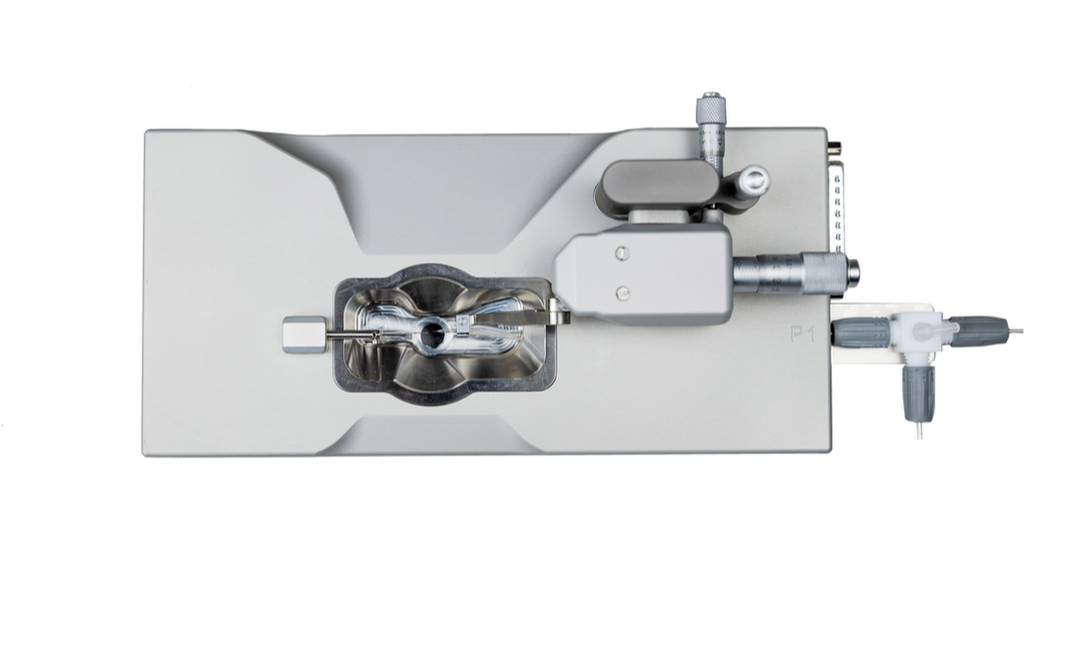
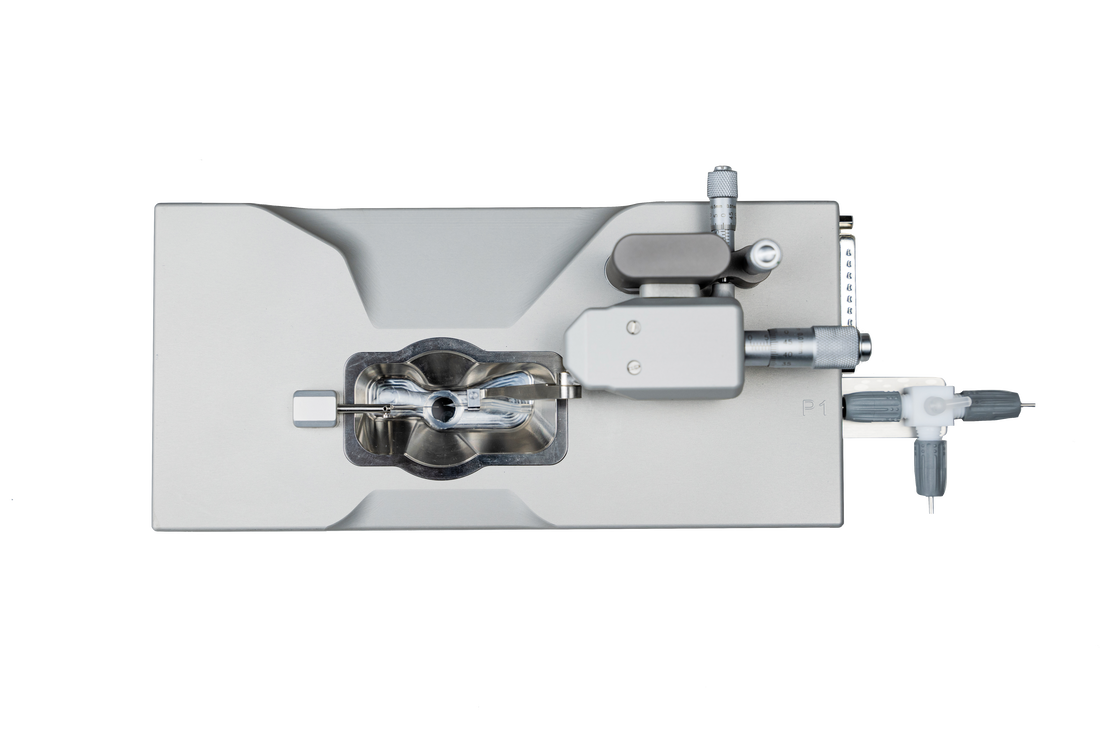
In the 114PB, one end of the isolated vessel is mounted on a glass cannula connected to the pressure pathway. The opposite end is secured to a mounting steel pin, creating the blind-sac preparation.
The chamber supports pressure control, vessel visualization and XYZ alignment. Its cover includes ports for optional superfusion, rapid filling and draining, oxygenation and cumulative compound addition.
The complete workflow combines the specialized chamber, mounting components and interface required for controlled blind-sac pressure myography.
Chamber cover with access for optional superfusion, rapid filling and draining, oxygenation and cumulative compound addition.
Vessel mounting arrangement with glass cannula, mounting steel pin, pressure connection and adjustable vessel positioning.
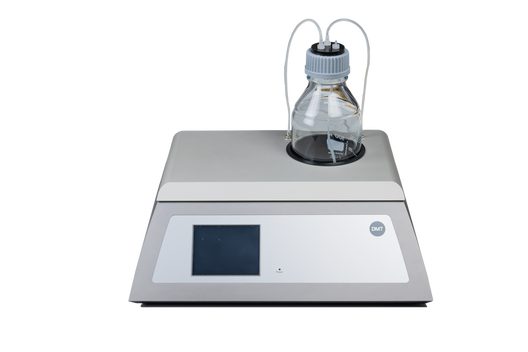
Interface with touch-screen control, heated reservoir, pressure regulation, calibration, chamber heating and data outputs.
The 114PB is relevant where the biological question requires an intact pressurized vessel but the specimen or protocol is better suited to a single-cannula, closed-end configuration.
Study pressure-dependent constriction and dilation in an intact tubular vessel preparation.
Measure vessel-diameter responses to vasoactive compounds and other experimental interventions.
Record changes in vessel and lumen diameter during controlled pressure steps.
Collect wall-thickness and lumen measurements during pressure-dependent protocols.
Combine pressure myography with compatible imaging of intracellular calcium and related vascular signals.
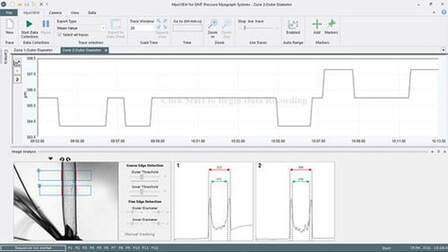
MyoVIEW provides continuous visualization and recording of the mounted vessel throughout constant-pressure, pressure-step and pharmacological protocols.
Core chamber, mounting, temperature, pressure, reservoir and communication specifications for evaluating the 114PB.
The correct configuration depends on vessel type, mounting-pin diameter, cannula format, microscope and camera pathway, pressure circuit, software requirements and user experience.
Typical workflows include MyoVIEW, a suitable computer, inverted microscope, camera, stage micrometer, vacuum package, heating bath or circulator, dissection microscope, light source and dissection tools.
Confirm mounting steel-pin dimensions, glass or stainless-steel cannulas, suture, installation kit, gas supply manifold, tubing and pressure transducer requirements.
Installation, vessel-mounting training, pressure calibration, leak testing, spare pressure transducers and maintenance coverage help support consistent daily operation.
The 114PB is designed for blind-sac pressure myography, allowing researchers to study small blood vessels under controlled pressure using a single cannula and a closed-end mounting configuration. It is ideal for experiments where traditional two-cannula mounting is not practical.
The 114PB is designed for small arteries, veins, and other isolated vessels larger than 40 µm that require a blind-sac mounting configuration. It preserves the vessel's natural tubular structure while allowing precise pressure control and diameter measurements.
The system measures vessel diameter, lumen diameter, wall thickness, intravascular pressure, myogenic responses, and pressure-dependent changes in vascular function. MyoVIEW software provides live vessel tracking and calculated vascular parameters throughout the experiment.
A blind-sac pressure myograph is the preferred choice when your vessel preparation or experimental protocol requires only one cannulated end while maintaining controlled intravascular pressure. This configuration is useful for specialized pressure-dependent studies where standard two-cannula mounting is not suitable.
Yes. The 114PB is well suited for myogenic tone, vascular reactivity, pressure-diameter relationships, endothelial function, and pharmacological studies under controlled pressure conditions. It can also be combined with compatible fluorescence imaging workflows.
The 114PB is commonly used in vascular physiology, hypertension, endothelial function, vascular remodeling, pharmacology, pressure-dependent vessel mechanics, and fluorescence imaging where a blind-sac preparation is required.
The 114P mounts vessels between two cannulas, making it the standard choice for most pressure myography studies. The 114PB uses a single cannula and a blind-sac mounting pin, making it the preferred system for specialized vessel preparations or protocols that require a closed-end configuration.
The 114PB is the right choice if your experiments require blind-sac mounting, controlled intravascular pressure, and pressure-dependent vessel measurements. For conventional two-cannula pressure myography, the 114P is typically the better option, while the 112PP is recommended when pulsatile pressure simulation is required.
Use the official DMT documentation and related support pages when planning, installing or operating the 114PB.
Product overview, applications and core technical specifications.
→ PDFDetailed system setup, pressure-interface, calibration and connection guidance.
→ PDFPractical workflow reference for routine system operation.
→ VIEWLive vessel tracking and analysis for DMT pressure myographs.
→ DMTReview the complete DMT pressure-myograph product family.
→ CMPCompare the 114PB with other pressure-myograph configurations.
→ HOWAccess calibration, cannula, cover-glass and leak-check guidance.
→ SUPPlan setup, vessel mounting, calibration and user onboarding.
→Share the vessel type and size, available preparation length, pressure range, mounting-pin requirement, cannula preference, microscope and camera setup and intended MyoVIEW analysis. DMT can help define the appropriate 114PB configuration.