

Two independent vessel positions
Test two vessels independently in the same system, supporting paired comparisons, replicate experiments and control-treatment designs.
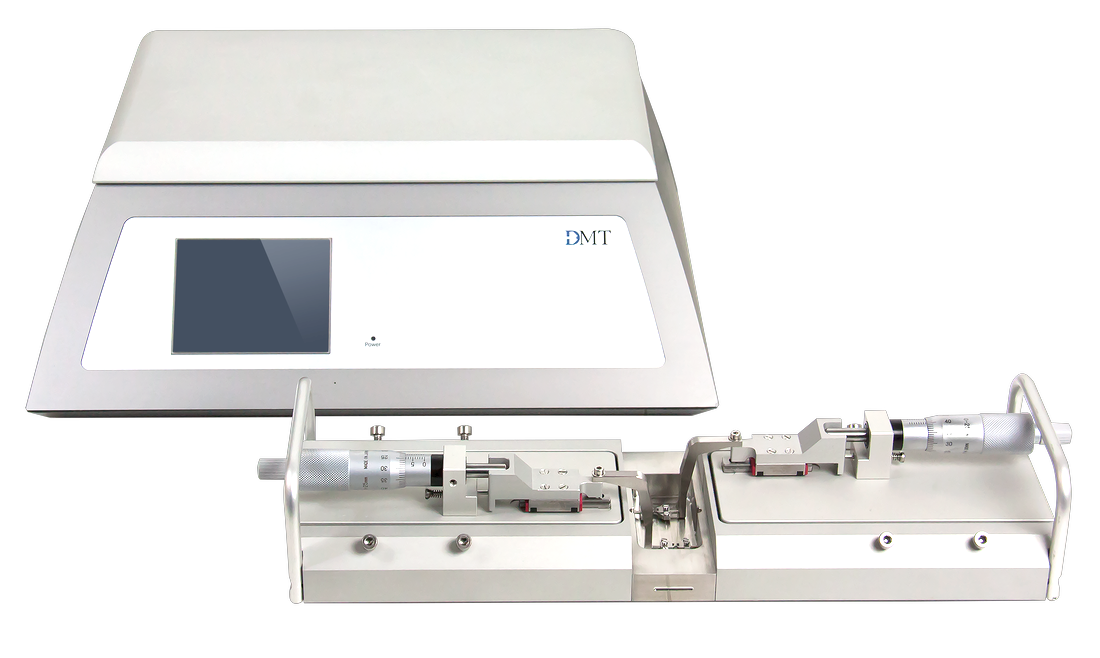
The DMT 420A is a dual-channel wire myograph for examining vascular reactivity and functional responses in small isolated arteries. It supports two independent ring-mounted vessel preparations from 30 µm to 3 mm, with precise force measurement, manual tension control and direct data streaming.
The 420A is suited for laboratories that need a compact, precise and flexible wire myograph for paired vessel studies, pilot experiments, teaching, method development and routine vascular pharmacology.
Test two vessels independently in the same system, supporting paired comparisons, replicate experiments and control-treatment designs.
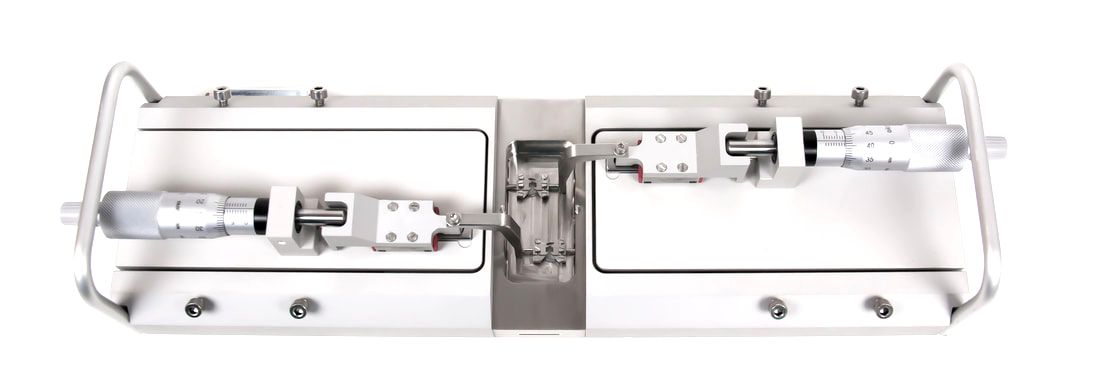
Use the chamber divider for independent testing or remove it to expose two vessels to identical drug concentrations in a shared bath.
Fine-scale micrometers allow manual control of vessel circumference and stretch during mounting and normalization.
Sensitive force transducers measure isometric tension development during contraction and relaxation protocols.
Glass chamber windows support morphological observation or fluorescence measurements using an inverted microscope.
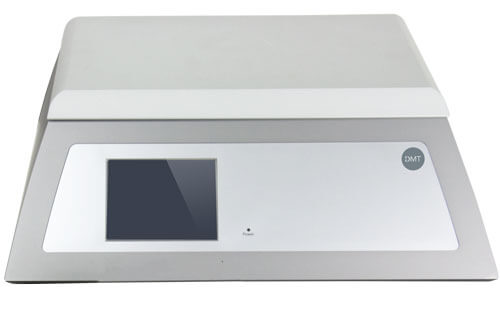
The touchscreen Wire Interface supports heating control, calibration, analogue outputs and direct digital communication.
Vessel segments are mounted as ring preparations by threading them over two parallel wires secured to two supports or jaws. One support is connected to a precision micrometer, while the other is connected to a force transducer.
The chamber can be divided for independent testing or used as one shared bath by removing the divider, allowing two preparations to be exposed to identical compound concentrations.
DMT product videos provide practical guidance for system introduction, setup, calibration, cleaning and experimental preparation.
Overview of the 420A and its principal components.
Practical setup workflow for the 420A system.
Calibration guidance for consistent force measurement.
Routine cleaning and system-care guidance.
Example experimental preparation using the 420A.
The 420A is well suited for vascular contraction, relaxation and functional response studies in small isolated arteries under isometric conditions.
Its dual-channel chamber is particularly useful for treated versus untreated comparisons, diseased versus healthy preparations, pilot studies and protocol development.
Examine ring-mounted vessels from approximately 30 µm to 3 mm.
Compare treated and untreated or diseased and healthy preparations.
Measure contraction and relaxation responses to pharmacological or physiological stimuli.
Use the optical base windows for observation or fluorescence measurements.
The following peer-reviewed studies illustrate how researchers have used the DMT 420A for vascular reactivity, endothelial-function, pulmonary vascular and mechanistic investigations across different experimental models.
Second-order femoral arteries were mounted in a Dual-Channel Wire Myography System 420A to assess vascular reactivity in adult offspring following maternal metformin treatment and obesity.
View publicationPulmonary arterial rings were studied using a DMT 420A to evaluate contractile responses, relaxation and endothelial nitric-oxide function in experimental pulmonary arterial hypertension.
View publicationMouse aortic segments were transferred to a DMT 420A Dual Wire Myograph System for isometric tension measurements used to investigate endothelial calcium signaling and vascular function.
View publicationAortic, mesenteric and pulmonary artery rings were measured using the DMT 420A to characterize the ionic mechanisms underlying channelrhodopsin-2-mediated control of vascular tone.
View publicationPublications are selected to demonstrate representative applications of the 420A. Inclusion does not imply author endorsement of DMT or its products.
The 420A workflow combines the dual wire myograph chamber with the Wire Interface for temperature control, calibration and direct communication with the selected acquisition system.
Supports two ring-mounted vessel preparations with independent micrometer adjustment, force measurement and removable chamber separation.
Provides touchscreen control of heating, force calibration, output configuration and direct digital or analogue data communication.
Core chamber, temperature, force-transducer and output specifications for planning a complete 420A installation.
These resources support jaw alignment, mounting, equilibration, normalization and micrometer workflows relevant to 420A operation.
Practical alignment guidance for mounting supports.
Change compatible mounting supports and components.
Practical equilibration guidance for vessel rings.
Small-vessel preparation and mounting guidance.
Context for normalization in wire-myograph workflows.
The correct configuration depends on the intended vessel preparation, comparative protocol, acquisition setup and available laboratory infrastructure.
Typical complete workflows include MyoDAQ or LabChart acquisition, a computer, dissection stereo microscope, light source, dissection tools, heating bath or circulator and vacuum package.
Useful options include an electronic valve for buffer drainage, gas supply manifold, pH electrode and meter, field-stimulation electrodes and a compatible stimulator.
Spare force transducers, tungsten wire, training, service agreements and extended warranty options can support consistent operation in high-use laboratories.
The 420A is designed to measure isometric force in two isolated blood vessel or tissue ring preparations simultaneously. Its dual-channel design makes it ideal for paired comparison studies, vascular pharmacology, endothelial function, and small artery research.
The 420A is designed for small arteries, veins, and other ring-mounted tissue preparations ranging from approximately 30 µm to 3 mm in diameter. It is widely used to study vascular reactivity and smooth muscle function under isometric conditions.
The system measures isometric force, vascular contraction, relaxation, endothelial function, concentration-response curves, and passive length-tension relationships. It provides high-resolution force measurements for functional vascular studies.
A dual-channel wire myograph allows researchers to compare two vessel preparations at the same time, such as treated versus untreated tissues or healthy versus diseased samples. Running experiments in parallel improves efficiency and helps reduce experimental variability.
Yes. The 420A features a removable chamber divider, allowing researchers to run two completely independent experiments or expose both vessel preparations to the same solution for direct side-by-side comparisons.
The 420A is commonly used in hypertension, diabetes, endothelial dysfunction, vascular pharmacology, atherosclerosis, pulmonary research, receptor pharmacology, and small artery physiology. It is especially valuable for paired comparison studies and method development.
The 420A is designed for paired comparison studies, allowing two vessel preparations to be tested simultaneously. The 620M features four independent chambers, making it the better choice for higher-throughput studies, drug screening, and experiments requiring multiple samples in parallel.
The 420A is the ideal choice if your research requires direct comparison of two vessel preparations, such as treatment versus control or healthy versus diseased tissue. If you only need a single chamber, consider the 320A. If your laboratory routinely studies multiple vessels in parallel, the 620M provides greater throughput.
Use the product data sheet, manuals, normalization guidance, software and support pages when evaluating, configuring or operating the 420A.
Product overview, applications and technical specifications.
→ PDFDetailed setup, interface, calibration and maintenance documentation.
→ PDFPractical reference for daily system use and workflow.
→ PDFDMT normalization reference for wire-myograph workflows.
→ SWData-acquisition software for DMT myograph workflows.
→ SWFind DMT installers, drivers and acquisition tools.
→ DMTCompare DMT wire-myograph platforms and workflows.
→ SUPSupport onboarding and consistent system operation.
→